
Snorkeling in Tavolara: fish, crystal-clear waters, and marine life
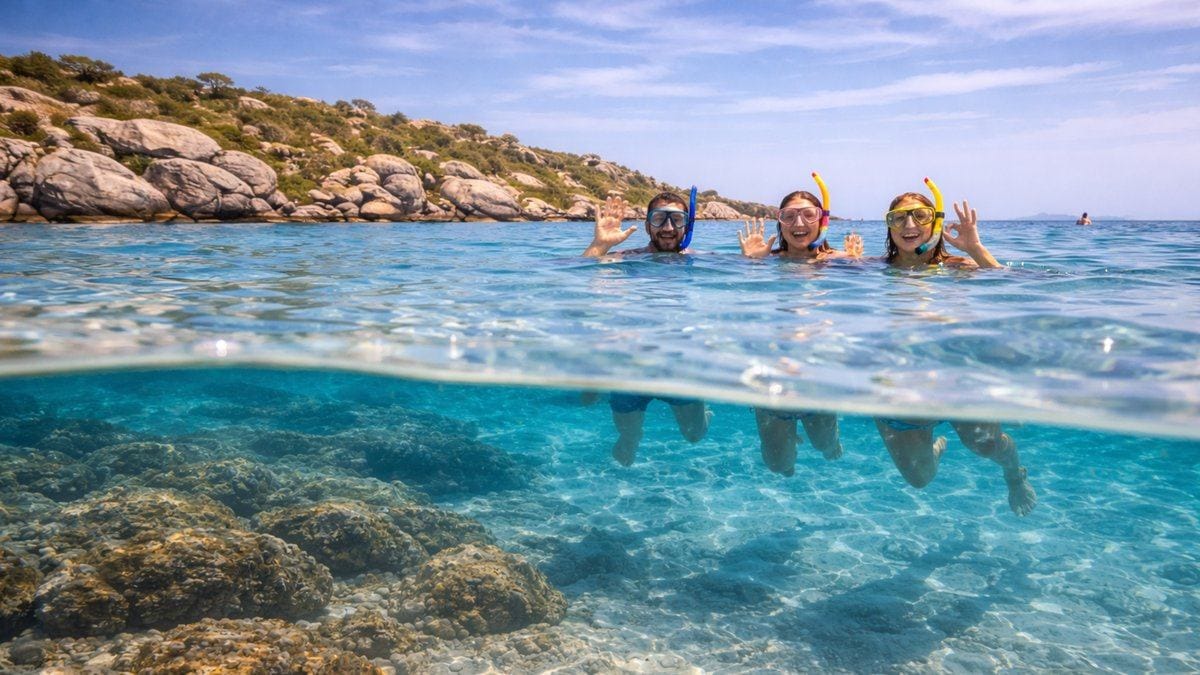
Snorkeling in Tavolara and Molara means exploring one of the most stunning marine environments in the Mediterranean.
The island lies within the Tavolara – Punta Coda Cavallo Marine Protected Area, which stretches along the northeastern coast of Sardinia, between Capo Ceraso and San Teodoro. It includes islands such as Tavolara, Molara, and Molarotto, with seabeds and coastal waters protected for their rich biodiversity and exceptionally clear water.
This area offers even beginners the chance to discover a colorful and vibrant underwater world. The seabed is highly varied, characterized by a mix of rocky areas, sandy bottoms, and Posidonia seagrass meadows. This remarkable diversity makes Tavolara an ideal destination for families, children, and beginners.
It is one of those places where simply putting on a mask and looking underwater is enough to find yourself surrounded by marine life.
Tabella dei Contenuti
Practical tips for enjoying snorkeling in Tavolara
Snorkeling in Tavolara is a simple yet unforgettable experience. With a few small precautions, it can become even more enjoyable, safer, and more respectful of the marine environment. Following basic guidelines helps you observe fish more easily, avoid disturbing wildlife, and protect this delicate ecosystem. Here are some practical tips to help you make the most of your snorkeling experience.
- Use a comfortable mask that fits well without being too tight, and a snorkel with a mouthpiece of the right size.
- Swim slowly to avoid scaring the fish, keep a horizontal position to prevent stirring up sediment from the seabed, and take breaks to observe marine life more easily and avoid fatigue.
- Never touch marine organisms. Some species can sting, and touching them can also harm their delicate balance. Do not collect shells or sand.
- Never feed the fish, as this can alter their natural behavior and disrupt the ecosystem.
- For children, using floating support devices provides greater safety and comfort while snorkeling.
- Use reef-safe sunscreen suitable for water activities, and avoid body oils or hair products that may harm the marine environment.
When to go snorkeling in Tavolara
Early in the morning, the sea is usually calmer and the light more intense. The sun shines on the surface and its rays penetrate deeper into the water, providing excellent visibility during one of the most active moments of marine life.
In the late afternoon, the light begins to fade and the marine environment slows its rhythm. Some fish prepare to rest, while other organisms become more active as they enter their nocturnal phase.
For this reason, every time of day can offer a rewarding snorkeling experience.
Throughout the year, water temperature varies with the seasons. The best months for snorkeling in Tavolara are during summer, when the water is warm and most comfortable.
In spring, the water is still a bit cool, and the experience becomes more enjoyable with a light wetsuit. If weather conditions are favorable, October is also an excellent month for snorkeling: the water remains pleasant, and the sea is much less crowded.
Marine life and fish you can see while snorkeling in Tavolara
In Tavolara and the nearby islands, you can encounter many typical Mediterranean species, especially in areas where rocky seabeds, sandy bottoms, and Posidonia seagrass meadows alternate.
Some fish move in small groups near the cliffs, while others prefer shallower and calmer waters. For this reason, snorkeling can offer different sightings in various coves and bays, even within just a few minutes.
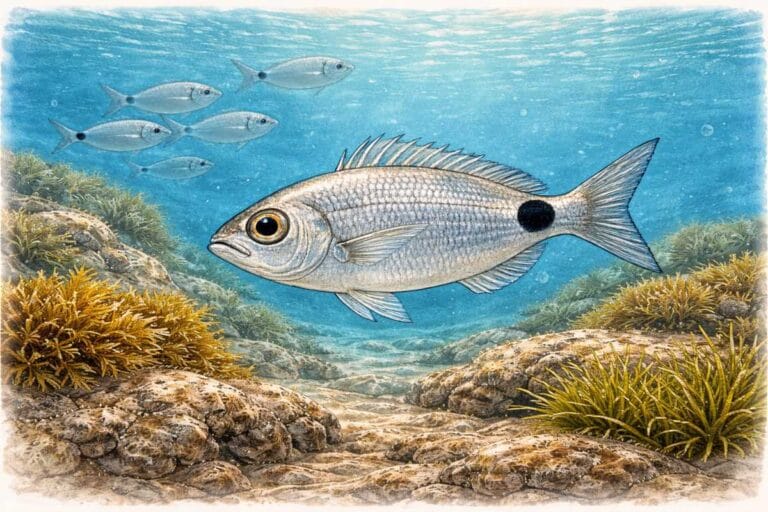
Saddled seabream
They are one of the most common fish species within the Tavolara – Punta Coda Cavallo Marine Protected Area, and it is almost impossible not to encounter them.
They have a silvery color and owe their common name to a distinctive round black spot near the tail, which resembles a large eye.
They often swim in large schools; they are voracious, fast, and curious, which is why they tend to approach anchored boats in search of food.
Remember not to feed the fish, as their natural diet is very different from ours.
Mediterranean damselfish
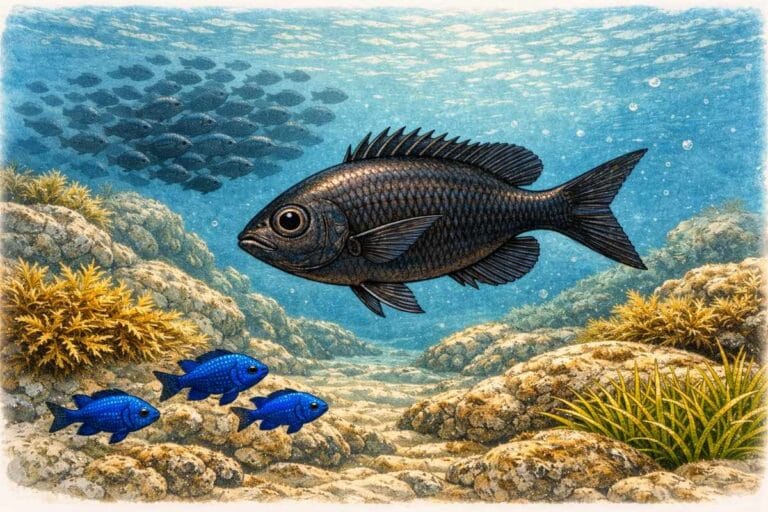
Mediterranean damselfish are also very common fish in this area.
They are small and easily recognizable by their dark color and their distinctive forked, swallow-shaped tail.
When present in large numbers, they form schools that look like moving clouds, drifting slowly before suddenly darting away in unison when a predator approaches.
An interesting fact: they change color as they grow. When young, they are bright electric blue, and as adults they become dark, almost black. While snorkeling in Tavolara and Molara, you will almost certainly encounter them.
Two-banded seabream
Shifting your gaze from the surface toward the deeper seabed, you will almost certainly spot seabream.
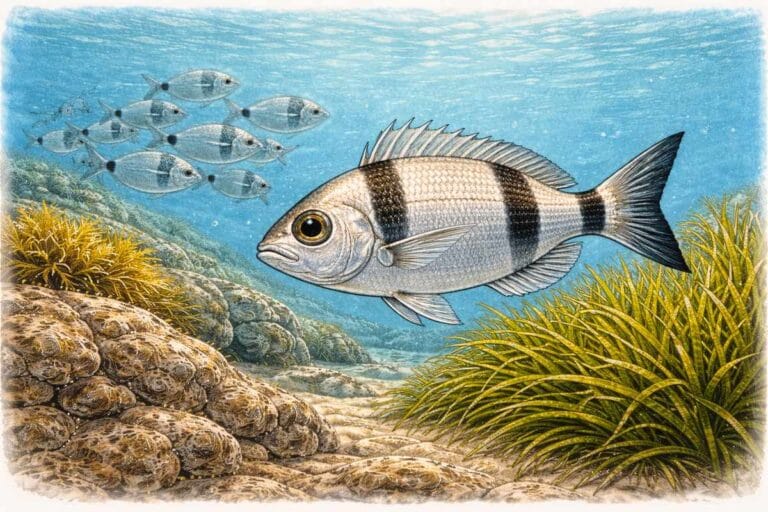
There are several species, but the easiest to recognize, and perhaps the most common, is the so-called two-banded seabream.
Its body is silvery in color, with two distinct vertical black bands: one near the tail and the other just behind the head.
It lives both in small groups and in larger schools. It moves between different habitats, so it can be seen near rocky areas as well as around Posidonia seagrass meadows.
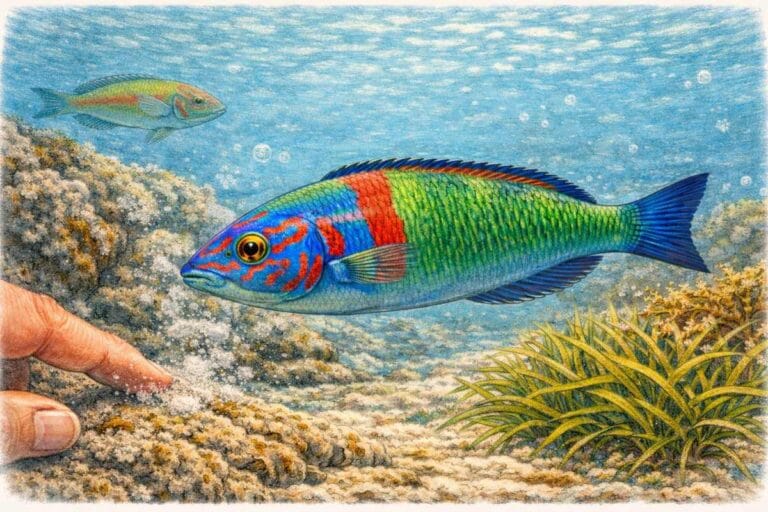
Ornate wrasse
If you observe the marine life around the rocks, you will almost certainly notice the ornate wrasse.
It is one of the most colorful fish in the Mediterranean. It moves quickly and gracefully, appearing to make small underwater flights in every direction.
Its head is rounded and vividly colored, with blue, red, and orange stripes.
A useful tip to observe it more closely: gently rubbing your finger on the rocks will stir up small particles in the water, which often attract curious fish.
An interesting fact: males and females have different colors.
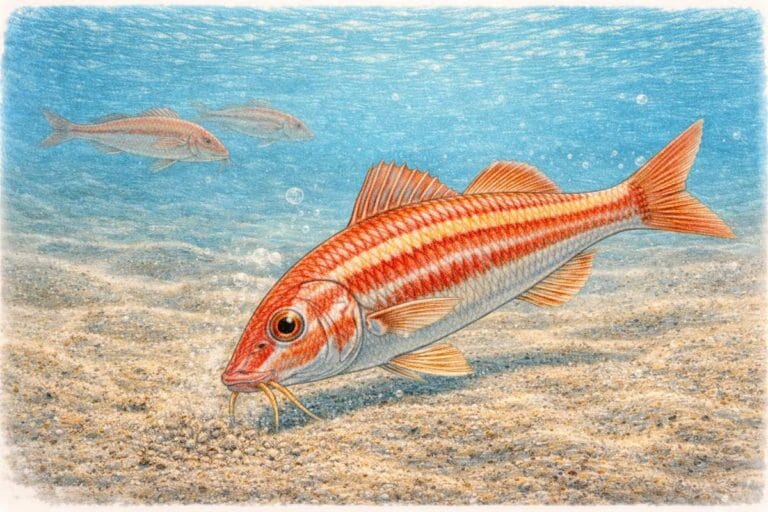
Red mullet
They move along sandy seabeds. They are impossible to miss, thanks to the two barbels under their snout, like small whiskers, which they use constantly to dig through the sand in search of food particles.
Their body is light-colored with reddish longitudinal stripes, and they have a large, curved head.
Interesting fact: although they were not traditionally considered a premium fish, partly due to their many small bones, in recent years they have been featured in Michelin-starred restaurants for their rich and distinctive flavor.
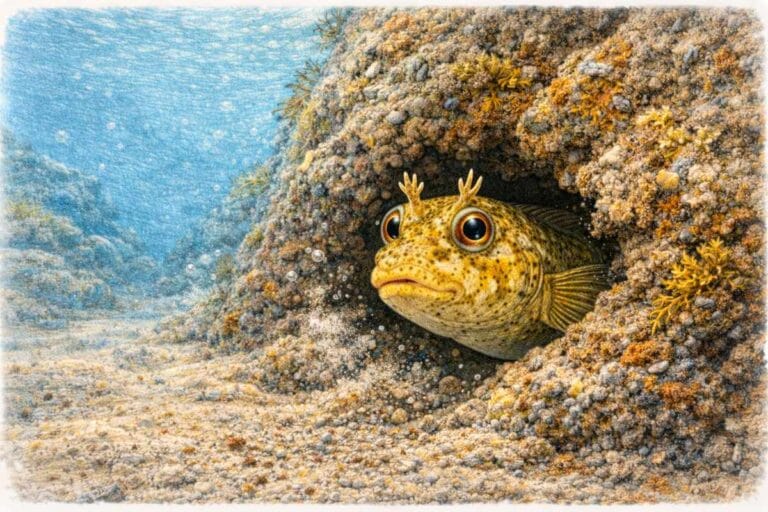
Blenny Fish
Blennies can be observed in cracks and crevices between rocks, even very close to the shore and in shallow water, where they hide and peek out with their small heads.
Despite their small size, they are very territorial and stubborn: they defend their shelter and rarely move more than a few meters away from it.
They are amusing fish, with elongated, sinuous bodies. The most common ones are light yellow or brown in color, and some have small branched appendages on their heads, resembling tiny horns.
They are among the fish most loved by children, as they are curious, colorful, and easy to observe.
Painted comber (Serranus scriba)
Lo sciarrano vive soprattutto tra scogli, spaccature e fondali rocciosi, spesso vicino alle praterie di posidonia. Ama le zone dove può nascondersi velocemente.
Il corpo ha una colorazione particolare con delle bande marroni e bianchi verticali e una chiazza chiara sull’addome; la coda è gialla e il capo presenta delle striature ondulate blu e arancioni.Si nutre di piccoli crostacei, vermi e pesciolini. Spesso resta fermo e scatta all’improvviso.
In tante parti d’Italia (e spesso anche in Sardegna) lo sciarrano viene chiamato con nomi diversi.
Lo sapevate? Si puo dire che sia un cugino delle cernie!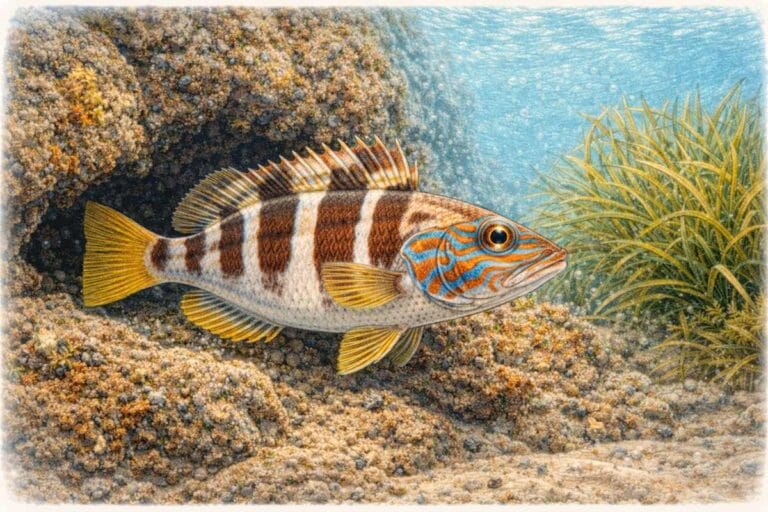
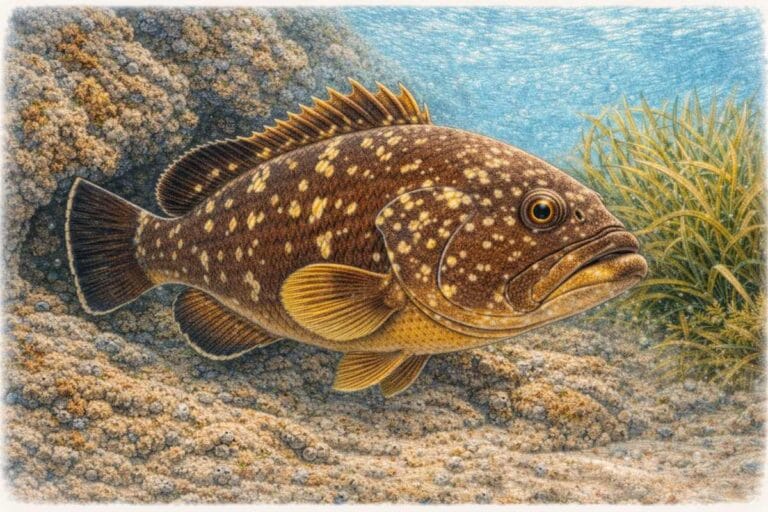
Dusky grouper
The “gentle giant” of the sea. The dusky grouper can reach impressive sizes (over 50 kg). Its body and head are massive, and its large pectoral fins move slowly in circular motions. It lives mainly in rocky environments.
It moves slowly, but when necessary it can dart away quickly and disappear into narrow crevices between the rocks.
Habitual and territorial, once you locate its shelter, it is often possible to find it there again. While snorkeling near rocky shores, you may encounter juvenile groupers in shallow water, recognizable by their brown bodies with yellowish spots.
An interesting fact: groupers change sex as they grow. They are born female and typically become male around the age of 10–12 years.
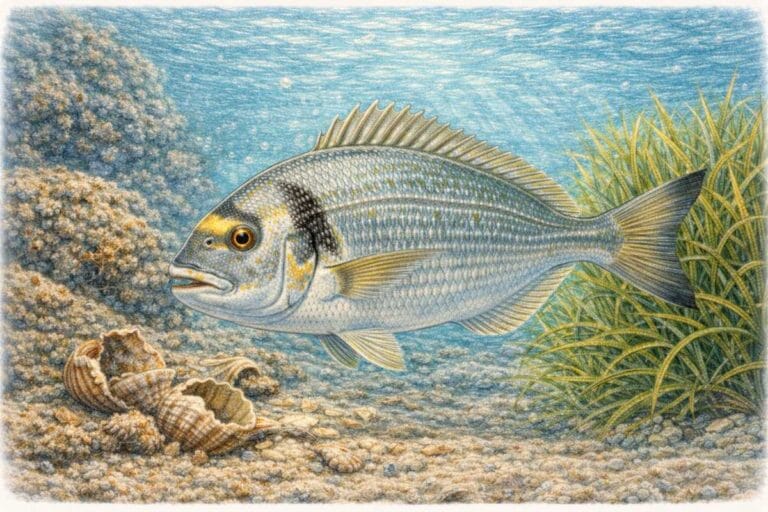
Gilt-head seabream
The gilt-head seabream lives close to the coast, over sandy and rocky seabeds and among Posidonia seagrass meadows, where it calmly searches for food.
It has an oval, silvery body, with a distinctive golden band between its eyes and bright reflective sides.
It feeds on mollusks, crustaceans, and small fish, using its strong teeth to break shells.
It can often be seen just a few dozen meters from the shore, but it is very cautious and alert, which makes it one of the most elusive fish in the sea.
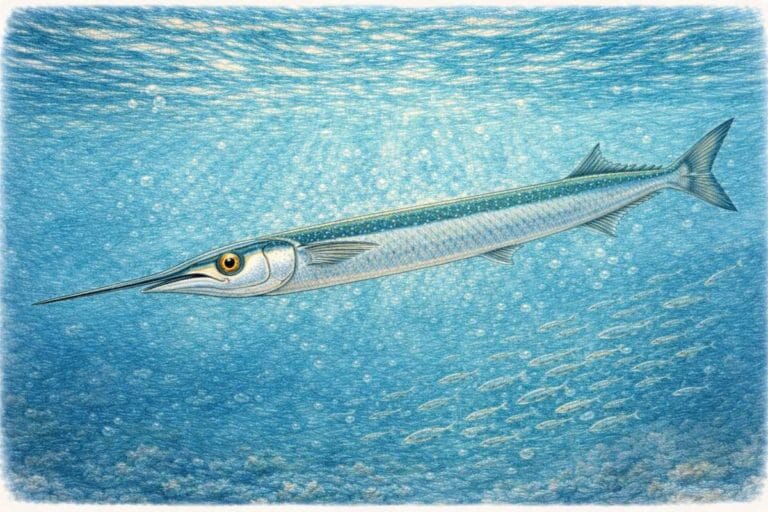
Mediterranean needlefish
The needlefish lives near the surface, both close to the coast and in open water, often in small groups.
It has a very long, slender, silvery body, with a pointed beak resembling a needle, which it uses to catch its prey. It mainly feeds on small fish and crustaceans.
Fishermen are often seen catching needlefish in the waters around Tavolara, where they are abundant, and later use them as live bait for offshore fishing.
Interesting fact: it is extremely fast, and when escaping, it can leap out of the water like an arrow.
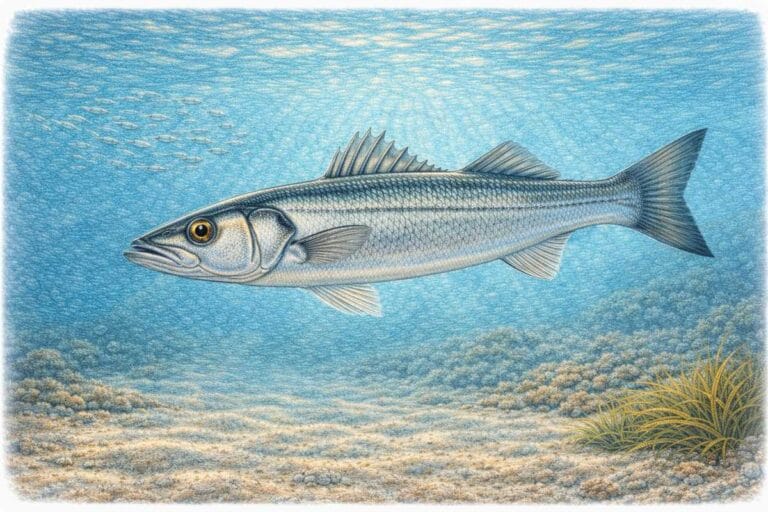
European seabass
The European seabass (also known as sea bass) is one of the most difficult common fish to observe.
It is usually spotted over sandy seabeds, in water at least 6–8 meters deep, where it swims calmly about one meter above the bottom.
Its body is slender and silvery, with a darker back and elegant fins. It feeds on small fish, shrimp, and cephalopods.
Interesting fact: in restaurants, about 99% of seabream and seabass are farm-raised.
Less common fish you may encounter while snorkeling in Tavolara
There are other marine species that are not as easy to encounter. Sometimes this is because they are seasonal, while in other cases they are simply very shy or difficult to spot. For this reason, when snorkeling, it is important to move slowly, know where to look, and choose the best locations. Keep reading to discover where you may encounter some of the rarest species.
If you would like to learn more, we recommend visiting the official pages of the Marine Protected Area.
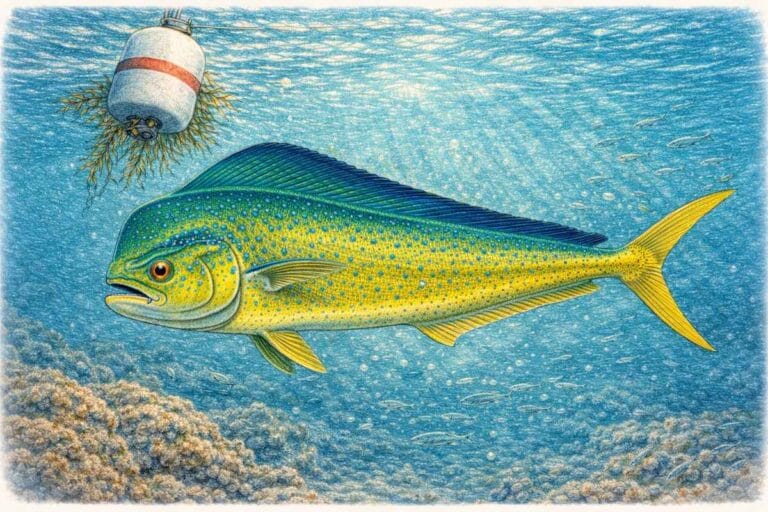
Common dolphinfish
The dolphinfish is a pelagic species that lives in open water but also approaches the coast, often staying near floating objects or buoys, where it finds shelter and food.
It has a powerful, streamlined body, with a high forehead and a long dorsal fin. Its colors are spectacular, ranging from blue-green to golden yellow.
It feeds on small fish and squid; in September, it is often seen darting between anchored boats while hunting fish that flee in all directions.
Interesting fact: it grows quickly and is an extremely fast swimmer.
Stingray
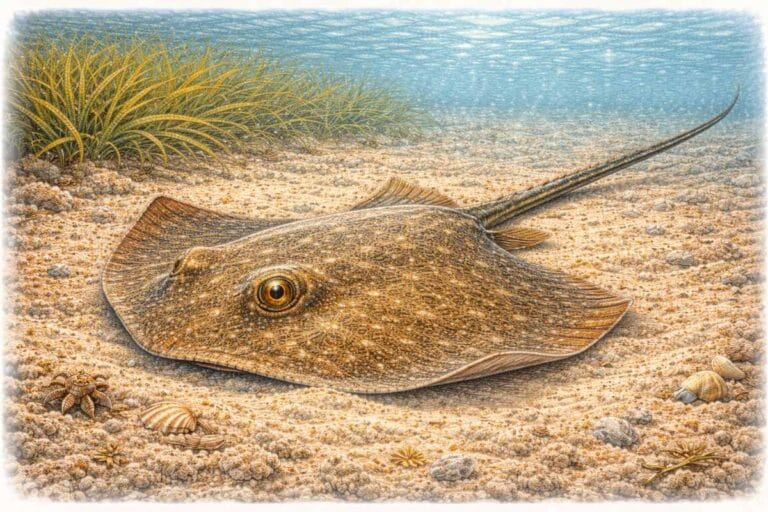
The Mediterranean stingray lives on sandy or muddy seabeds, often close to the shore, where it camouflages itself by covering its body with a thin layer of sand.
It has a flat, diamond-shaped body and a long, slender tail.
It feeds on small fish, crustaceans, and mollusks that it finds on the seabed.
Interesting fact: it can remain motionless for long periods and suddenly dart away, but it should always be observed with respect, as its tail can deliver a defensive sting.
Barracuda
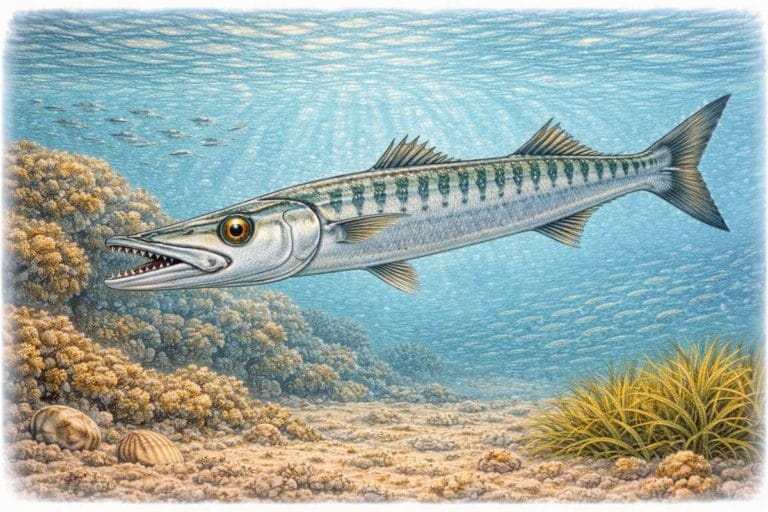
The barracuda, which has become increasingly common in our seas in recent years due to rising water temperatures, lives in clear coastal waters, often in small groups.
It has a long, streamlined, silvery body, with strong jaws and clearly visible teeth.
In the Mediterranean, it is smaller in size compared to its tropical relatives.
When hunting, it can remain motionless for a few moments before suddenly darting forward. It often follows schools of fish from a distance.
It is not considered dangerous to humans.
Not fish, but other marine life you can see while snorkeling in Tavolara
They are not fish, but fascinating inhabitants of the sea.
During a half-day boat trip among the islands, it is possible to observe, in addition to fish, many other marine species such as octopuses, cuttlefish, and squid, which belong to the cephalopod family—intelligent animals capable of changing color.
Between the islands, it is not uncommon to spot mammals such as dolphins searching for food. And if you are a careful observer, while snorkeling you may also discover nudibranchs: small shell-less mollusks with incredibly varied colors and shapes.
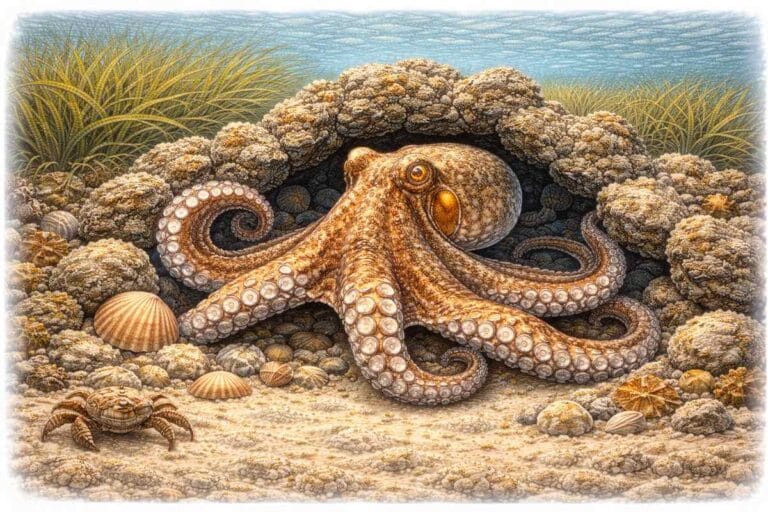
Octopus
The octopus lives among rocks, crevices, and Posidonia seagrass meadows, where it builds its den by collecting shells and small stones at the entrance.
It has eight arms with powerful suckers and a soft body capable of squeezing into extremely narrow spaces.
It feeds on crabs, mollusks, and small fish.
Although it is abundant along the Gallura coast, it is not easy to spot thanks to its perfect camouflage and its habit of spending much of its time inside its den. It is highly intelligent and very curious.
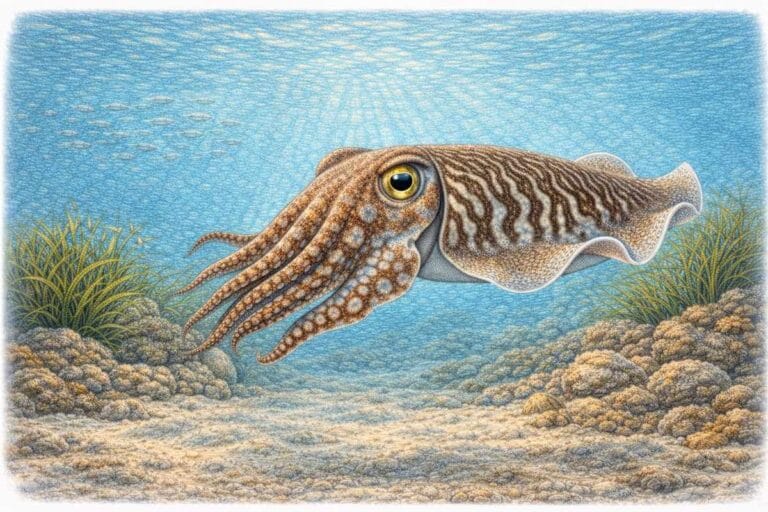
Cuttlefish
Cuttlefish live among sandy and rocky seabeds and Posidonia seagrass meadows, where they camouflage themselves perfectly by changing color in just a few moments.
They have an oval-shaped body with lateral fins and fast tentacles used to catch small fish, shrimp, and crustaceans.
Watching them swim is a true spectacle of nature. They are fascinating and sometimes curious animals. In winter, they often approach the coast to lay their eggs, attaching them to algae and submerged branches.
Interesting fact: they can release ink to confuse predators and escape.
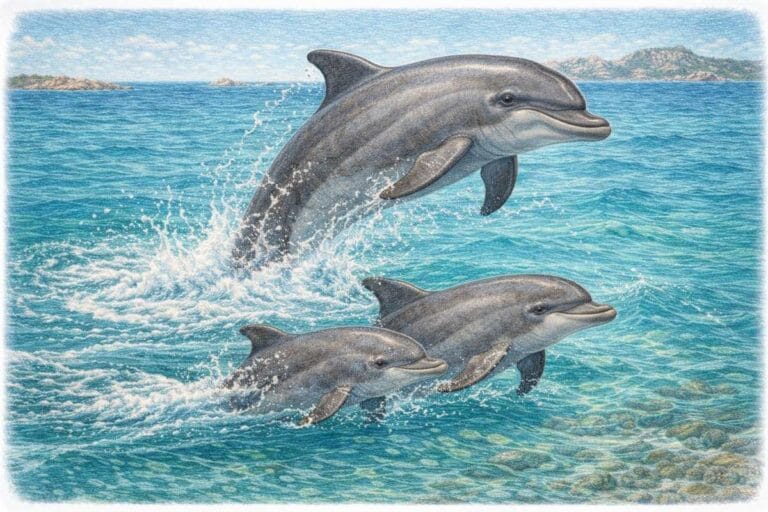
Common bottlenose dolphin
The common bottlenose dolphin is the most frequently spotted dolphin species in Sardinia. It lives mainly in clear coastal waters but can also venture offshore.
It has a robust, gray body, with a darker back and a short snout, and it lives in large family groups.
It feeds on fish and cephalopods, and it is not uncommon to see it during a full day boat trip to the islands, often hunting alongside its young.
It is highly intelligent and playful, and it often follows boats, swimming and jumping through the waves.
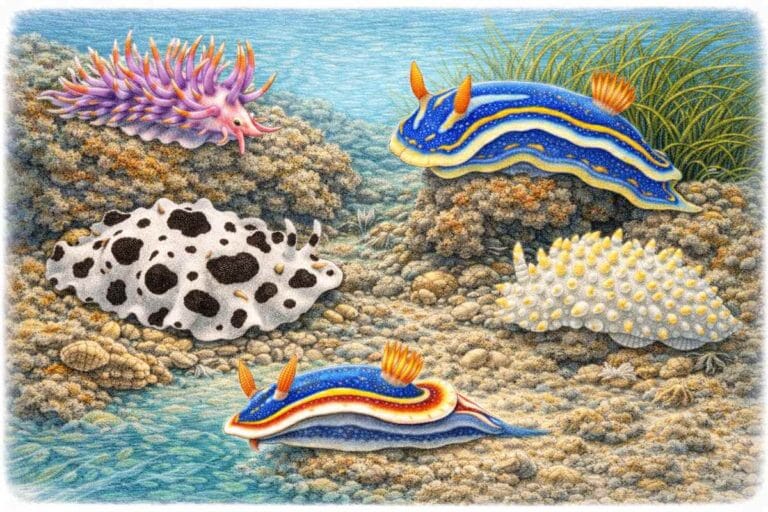
Nudibranchs
Nudibranchs are small marine mollusks without a shell, famous for their incredible colors and unique shapes, so much so that they are often called “sea butterflies”.
In Sardinia, many species can be observed, such as the Flabellina, with its pink and purple tones and feathery appendages, the Hypselodoris, with its intense blue colors, and the Discodoris atromaculata, also known as the “cow nudibranch” due to its pale body with black spots.
They live among rocks and Posidonia seagrass meadows, moving slowly along the seabed.
While snorkeling in Tavolara, nudibranchs can sometimes be spotted by careful observers near rocks and seagrass.
Little-known facts about marine life in Tavolara
Fish behavior changes throughout the day
Most fish are more active in the morning and become calmer in the afternoon.
However, some species become active at sunset, turning into skilled and efficient nocturnal hunters.
Observing the seabed at night with a torch can reveal surprising sights: fish emerging from the sand, moray eels moving quickly, small crustaceans walking along the seabed, and even bioluminescent organisms.
The sea is full of hidden details
The sea is not only home to vibrant fish, sponges, and colorful algae, but also to countless small details and hidden features.
With a bit of patience and careful observation, you can discover wonders that are invisible at first glance: transparent shrimp, small colorful crabs, tiny fish with bright-colored heads such as the so-called “pepper fish,” delicate algae shaped like miniature umbrellas, and “sea slugs” with vivid and fluorescent colors.
Why snorkeling in Tavolara is an experience you should not miss
The sea of Tavolara is a unique natural heritage, where marine life thrives with extraordinary biodiversity.
Here, snorkeling becomes a simple, relaxing, and accessible experience for everyone: all you need is a mask and a snorkel to discover a world full of colors, fish, and fascinating underwater environments.
To fully enjoy this experience and these beautiful surroundings aboard comfortable boats, with slow rhythms ideal for families, you can take a look at our boat trips.
Written by:
Simona Palamidesi
Biologa marina e skipper di Sole Sale Sardinia - Slow Boat Tour Experience
More Tips and Guides...
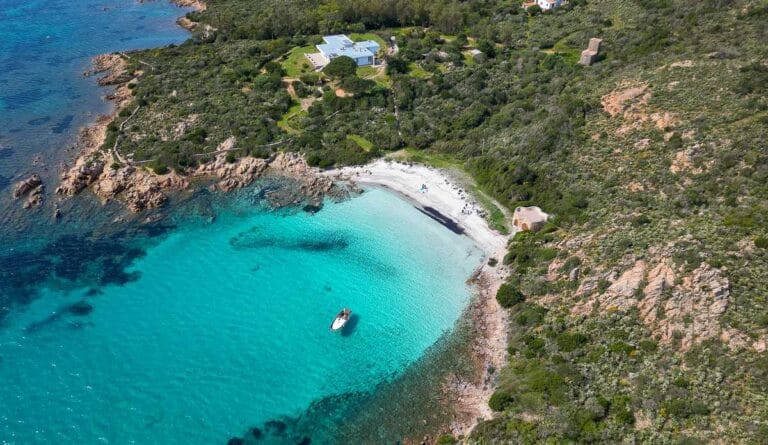
Best Beaches in Porto San Paolo and Surroundigs
Planning a holiday in Sardinia, around Tavolara and Porto San Paolo? Here you’ll find everything you need to know about the best beaches and places to visit.
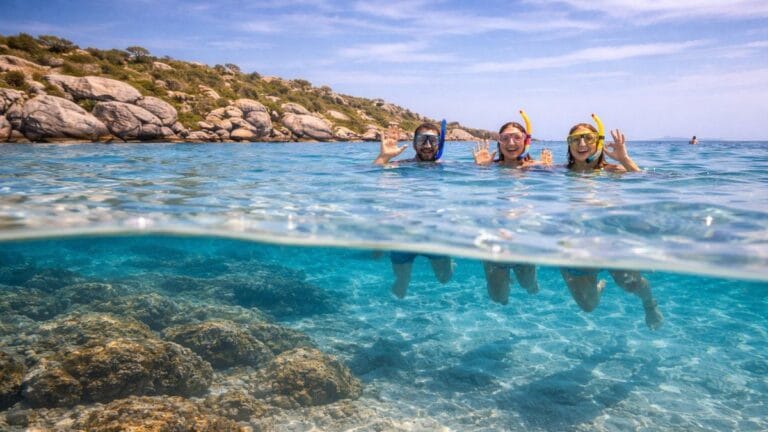
Snorkeling in Tavolara: Fish, Colors and Marine Life
Snorkeling in Tavolara and Molara means exploring one of the most stunning seas in the Mediterranean, within a crystal-clear Marine Protected Area.
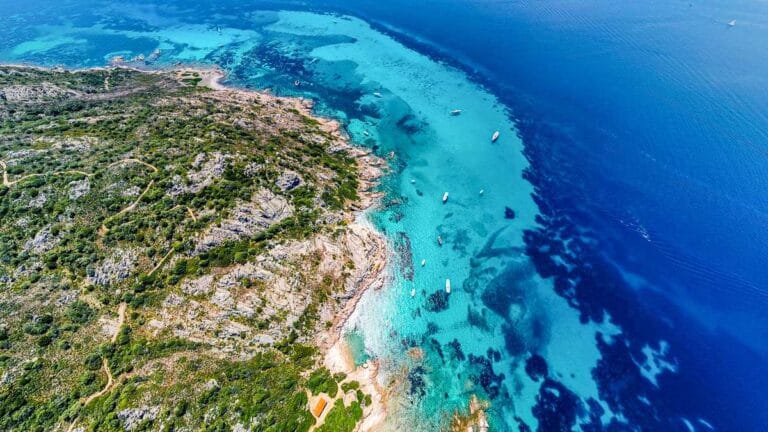
The most beautiful beaches and coves of Tavolara and Molara
The most beautiful beaches of Tavolara and the surrounding area, including the Molara Pools and other hidden spots, overlook the open sea, far from the mainland coast.